| name | iblai-vibe-ops-build |
| description | Build and run your ibl.ai app on desktop and mobile (iOS, Android, macOS, Surface) |
| globs | null |
| alwaysApply | false |
/iblai-vibe-ops-build
Build and run your ibl.ai app on desktop and mobile using Tauri v2. Covers
iOS, Android, macOS/Linux desktop, and Surface tablet builds.
Building: run Tauri directly — pnpm exec tauri <cmd> (e.g.
pnpm exec tauri dev, pnpm exec tauri ios build). The Tauri
shell templates live in assets/tauri/ (copy into
src-tauri/), the CI workflows in
assets/tauri/workflows/, and the default app
icons in assets/icons/. The full mapping (init,
device, ci-workflow, iconography, screenshot) is in
references/builds-command.md.
Before adding build support or running a dev build, stop all running dev
servers (pnpm dev, next dev, etc.) to avoid port conflicts. Kill any
process on port 3000 before proceeding.
When the user asks to add iOS or Android build support, automatically start
the emulator/simulator after initialization -- just like you would start
pnpm dev after adding auth. Run xcrun simctl list devices (iOS) / adb devices (Android) to find the
available device name, then start the dev build with that device.
Do NOT guess device names. Always run xcrun simctl list devices (iOS) / adb devices (Android) first and use
a device name from the output.
Prerequisites (All Platforms)
Run with --ignore-scripts to skip package lifecycle (postinstall) scripts.
- Rust toolchain installed via rustup
How Dev Builds Work
All platforms (desktop and mobile) use a static next build export. Tauri
runs the frontend build (via beforeBuildCommand) before starting the dev
server -- the WebView loads the static files from ../out on all platforms.
For dev builds, you can optionally deploy to Vercel with the
/iblai-vibe-ops-deploy skill. That deploys out/
and updates devUrl in tauri.conf.json.
Mobile Safe Area
The generated CSS includes padding: env(safe-area-inset-*) on <body> and
the layout sets viewport-fit=cover. This prevents content from overlapping
with the iOS status bar / notch and Android status bar. If you see content
behind the status bar, verify:
globals.css (or iblai-styles.css) has padding-top: env(safe-area-inset-top) on bodyapp/layout.tsx metadata includes viewport: "width=device-width, initial-scale=1, viewport-fit=cover"
Mobile SSO
For mobile builds (iOS/Android), the auth redirect must use a custom URI
scheme instead of https://. Set TAURI_CUSTOM_SCHEME in iblai.env:
TAURI_CUSTOM_SCHEME=myapp
This configures:
NEXT_PUBLIC_TAURI_CUSTOM_SCHEME in .env.local — the frontend uses
this to pass redirect-to=myapp:// to the auth SPA- The Tauri deep-link handler to listen for
myapp:// callbacks
Without this, mobile SSO will redirect to an HTTPS URL that stays inside
the system browser session and never returns to the app.
Build-Time Flags (Tenant Lock & In-App Purchase)
The Tauri shell exposes two build-time flags so a single codebase can
produce differently-configured builds — e.g. one desktop/mobile build
locked to tenant A and another locked to tenant B, both served from the same
app URL. The values are baked in at cargo build time via Rust's
option_env!, so they are set as environment variables in the build shell
(not iblai.env, which is CLI config) before running the build:
| Env var | Command exposed to JS | Default | Effect |
|---|
IBL_TENANT | get_locked_tenant → string | "" (unlocked) | Locks the build to one tenant: the frontend forces login to it and hides tenant switching. |
IBL_ALLOW_IN_APP_PURCHASE | allow_in_app_purchase → bool | false | Enables in-app purchase UI. Truthy values: 1/true/yes/on (case-insensitive). |
Set them before the build (they are read at compile time, so they must be in
the environment when cargo compiles src-tauri):
IBL_TENANT=acme IBL_ALLOW_IN_APP_PURCHASE=true iblai builds build
In CI, set them as env on the build step:
- name: Build
  env:
    IBL_TENANT: acme
    IBL_ALLOW_IN_APP_PURCHASE: "true"
  run: iblai builds build
src-tauri/build.rs declares cargo:rerun-if-env-changed for both, so cargo
recompiles when a value changes between builds. Unset → the "off" default, so
a normal build is unaffected.
Frontend consumption (app code, outside this template) invokes the
commands and reacts to them:
import { invoke } from '@tauri-apps/api/core';
const lockedTenant = await invoke<string>('get_locked_tenant');
const iap = await invoke<boolean>('allow_in_app_purchase');
When get_locked_tenant returns a non-empty key, force the user onto that
tenant (logging out of any other) and hide the tenant switcher. The commands
are registered in src-tauri/src/lib.rs (generate_handler!); no extra ACL
entry is needed since they are application commands.
App Icons
Generate platform-ready icons from your logo (works for all platforms):
pnpm exec tauri icon path/to/logo.png
This creates all required sizes in src-tauri/icons/.
List Available Devices
pnpm exec tauri device
iOS
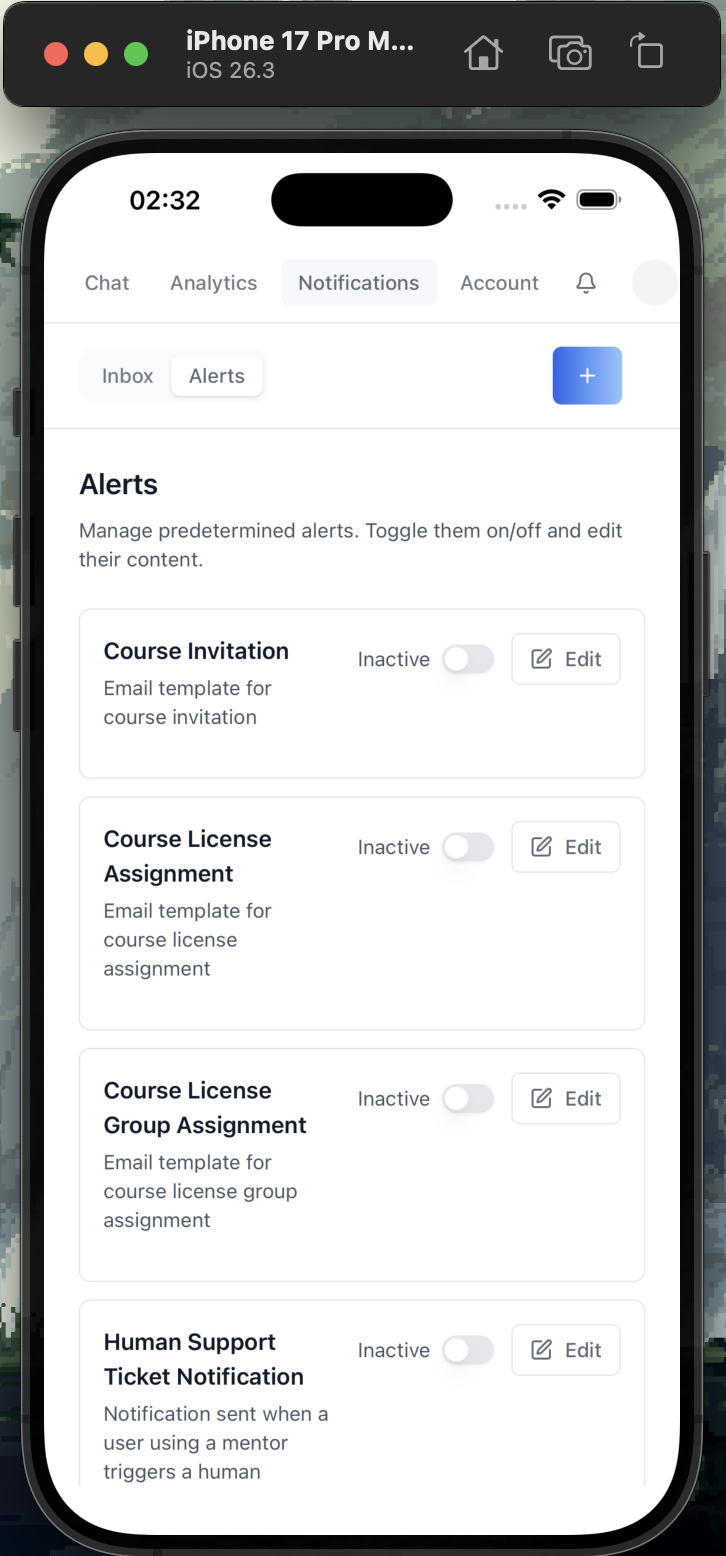
Build and run on iOS Simulator and real devices.
iOS Prerequisites
Initialize iOS Project
Run this once after adding Tauri support:
pnpm exec tauri ios init
This generates src-tauri/gen/apple/ with the Xcode project, Swift bridge
code, and iOS configuration.
If you get a Rust target error, make sure both targets are installed:
rustup target add aarch64-apple-ios aarch64-apple-ios-sim
Run on iOS Simulator
First, list available simulators:
pnpm exec tauri device
Always pick a device from the list. Choose the most mainstream iPhone
(e.g., the newest Pro Max available). Do NOT run without a device name.
If VERCEL_TOKEN is set in iblai.env, deploy the frontend first:
Then start the dev build:
pnpm exec tauri ios dev "iPhone 16 Pro Max"
The first build takes several minutes; subsequent builds are fast.
Troubleshooting Simulator
- "No available iOS simulators": Open Xcode > Settings > Platforms > download an iOS runtime
- Build fails with "linking" errors: Verify Xcode path with
xcode-select -p. If incorrect, the user should run sudo xcode-select -s /Applications/Xcode.app/Contents/Developer themselves (requires elevated privileges -- confirm with the user before suggesting this)
- Simulator won't launch: Try
xcrun simctl shutdown all then retry
Run on Physical iOS Device
Connect your iPhone via USB, then:
pnpm exec tauri ios dev --device
Requirements for Physical Devices
- Apple Developer account (free or paid)
- Device registered in your Apple Developer portal
- Development provisioning profile configured in Xcode
To set up signing:
- Open
src-tauri/gen/apple/<app>.xcodeproj in Xcode
- Select the target > Signing & Capabilities
- Set your Team and Bundle Identifier
- Xcode auto-manages provisioning profiles
Free developer accounts can run on up to 3 devices for 7 days.
A paid Apple Developer Program ($99/year) removes this restriction.
Build Release .ipa
Local Build
pnpm exec tauri ios build
Or:
pnpm tauri:build:ios
The .ipa file is generated at src-tauri/gen/apple/build/ (or use
find src-tauri/gen/apple -name "*.ipa" to locate it).
App Store Build (CI)
Generate the GitHub Actions workflow:
This creates .github/workflows/tauri-build-ios.yml which sets up the
full pipeline and uploads the .ipa as a build artifact.
Required GitHub Secrets for iOS CI
| Secret | Description |
|---|
APPLE_API_KEY_BASE64 | Base64-encoded App Store Connect API key (.p8 file) |
APPLE_API_KEY_ID | Key ID from App Store Connect > Users and Access > Keys |
APPLE_API_ISSUER | Issuer ID from App Store Connect > Users and Access > Keys |
To encode your .p8 key:
base64 -i AuthKey_XXXXXXXXXX.p8 | pbcopy
Android
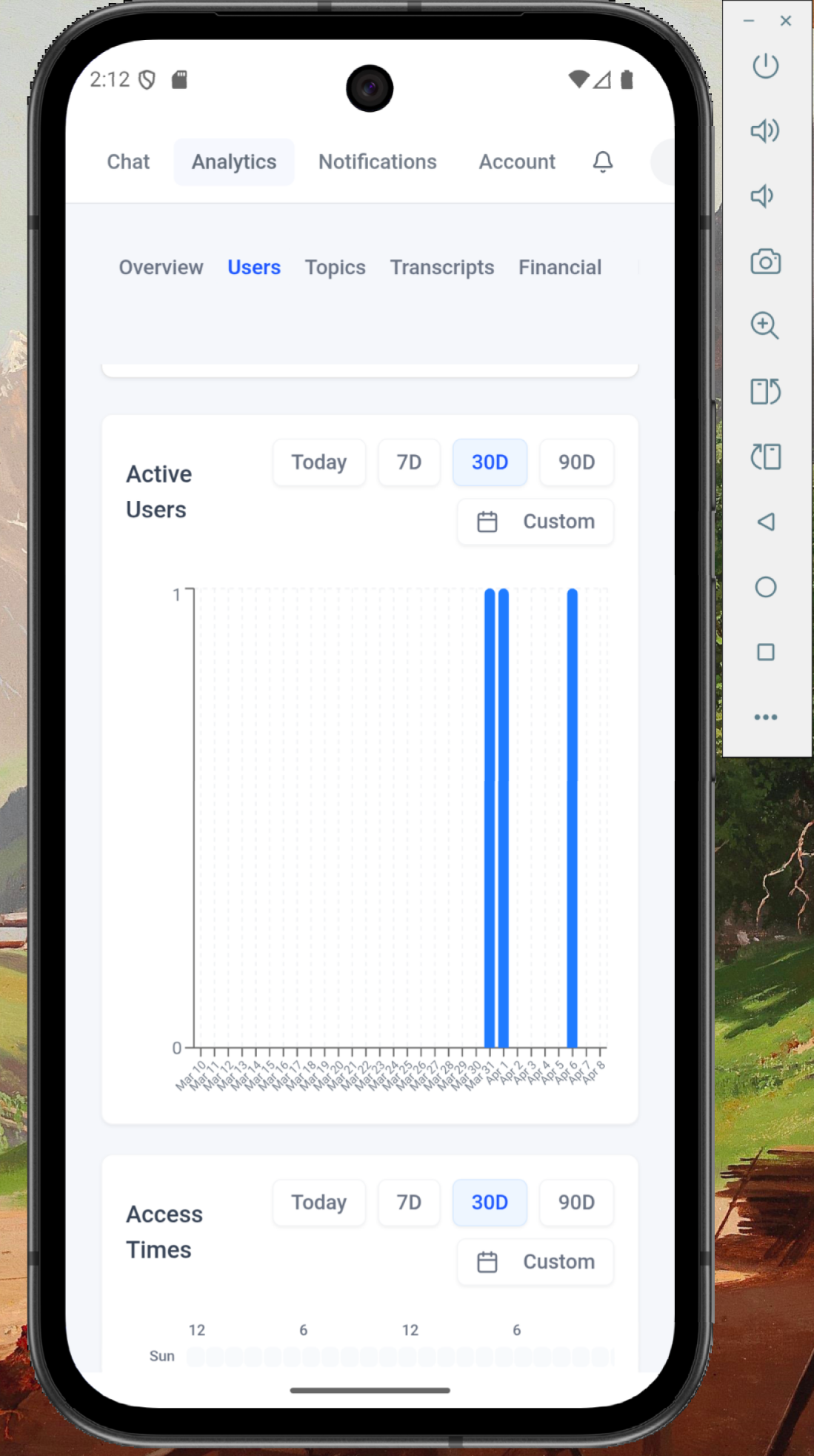
Build and run on Android emulators and real devices.
Android Prerequisites
Initialize Android Project
pnpm exec tauri android init
This generates src-tauri/gen/android/ with the Gradle project.
Run on Android Emulator
First, list available emulators:
pnpm exec tauri device
Always pick a device from the list. Choose the most mainstream Pixel
(e.g., "Pixel_9", "Pixel_8" — whichever is the newest in the list).
Do NOT run without a device name.
If VERCEL_TOKEN is set in iblai.env, deploy the frontend first:
Then start the dev build:
pnpm exec tauri android dev "Pixel_9"
Run on Physical Android Device
Connect your device via USB with USB debugging enabled, then:
pnpm exec tauri android dev --device
Build Release APK
pnpm exec tauri android build
Or:
pnpm tauri:build:android
Android CI
macOS (Desktop)
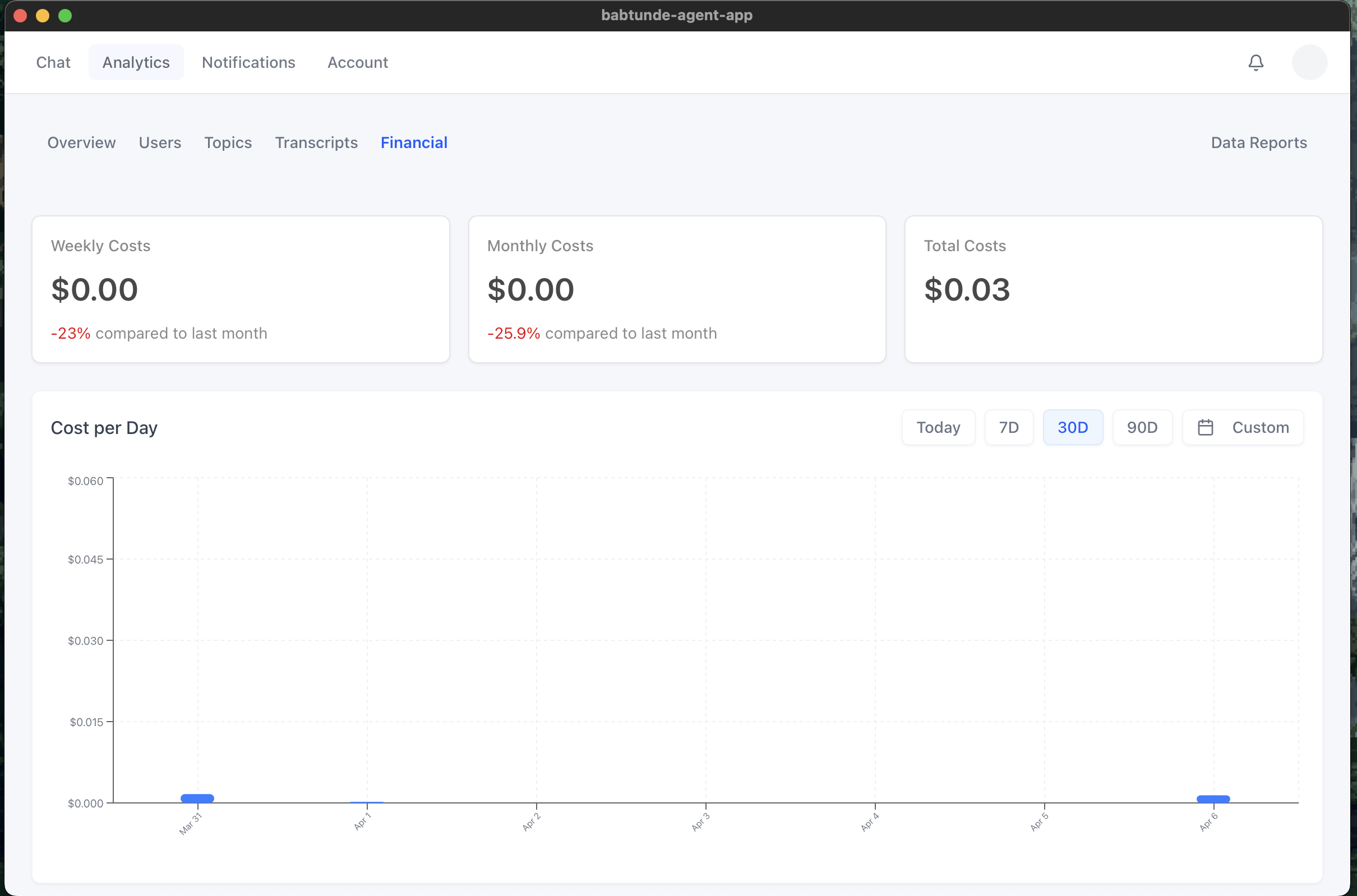
macOS Prerequisites
- Xcode Command Line Tools:
xcode-select --install
Run in Dev Mode
If VERCEL_TOKEN is set in iblai.env, deploy the frontend first:
Then start the dev build:
pnpm exec tauri dev
Build Release .dmg / .app
pnpm exec tauri build
Or:
pnpm tauri:build
macOS CI
Surface
Build for Microsoft Surface tablets running Windows.
Surface Prerequisites
- Visual Studio Build Tools with C++ workload
- WebView2 runtime (included on Windows 11, downloadable for Windows 10)
Run in Dev Mode
If VERCEL_TOKEN is set in iblai.env, deploy the frontend first:
Then start the dev build:
pnpm exec tauri dev
Build Release .msi / .exe
pnpm exec tauri build
The installer targets are configured in src-tauri/tauri.conf.json under
bundle.targets (includes nsis and msi by default).
Surface CI
Linux (Desktop)
Linux Prerequisites
Run in Dev Mode
pnpm exec tauri dev
Build Release .deb / .AppImage
pnpm exec tauri build
Linux CI
All Platforms CI
Generate CI workflows for all platforms at once:
Summary of Commands
| Task | Command |
|---|
| Add Tauri support | the Tauri shell (copy assets/tauri/ into src-tauri/) |
| Generate app icons | pnpm exec tauri icon logo.png |
| List available devices | xcrun simctl list devices (iOS) / adb devices (Android) |
| iOS | |
| Initialize iOS project | pnpm exec tauri ios init |
| Run on iOS Simulator | pnpm exec tauri ios dev "iPhone 16 Pro Max" |
| Run on physical iPhone | pnpm exec tauri ios dev --device |
| Build release .ipa | pnpm exec tauri ios build |
| iOS CI workflow | the templates in assets/tauri/workflows/ |
| Android | |
| Initialize Android project | pnpm exec tauri android init |
| Run on Android emulator | pnpm exec tauri android dev "Pixel_9" |
| Run on physical Android | pnpm exec tauri android dev --device |
| Build release APK | pnpm exec tauri android build |
| Android CI workflow | the templates in assets/tauri/workflows/ |
| Desktop | |
| Run desktop dev mode | pnpm exec tauri dev |
| Build desktop release | pnpm exec tauri build |
| macOS CI workflow | the templates in assets/tauri/workflows/ |
| Surface CI workflow | the templates in assets/tauri/workflows/ |
| Linux CI workflow | the templates in assets/tauri/workflows/ |
| All CI workflows | the templates in assets/tauri/workflows/ |
| Deploy | |
| Deploy frontend to Vercel | the /iblai-vibe-ops-deploy skill |
| Remove Vercel dev URL | Remove devUrl from src-tauri/tauri.conf.json |
Reference
